
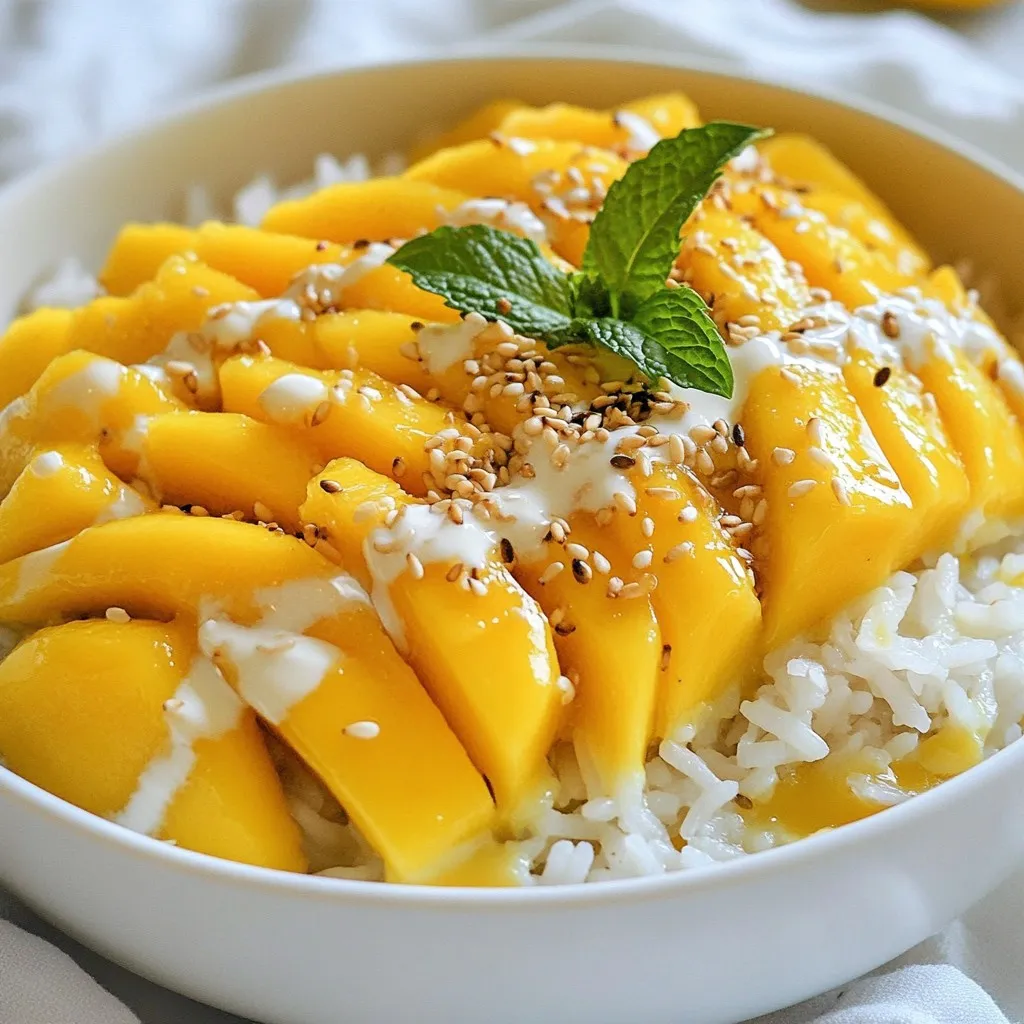
Mango sticky rice is a dessert that brings joy to all. With its sweet and creamy coconut sauce, paired with fresh, ripe mangoes, this treat is a must-try. I’ll guide you through choosing the best ingredients, cooking techniques, and some fun variations to make it your own. Whether you’re a pro in the kitchen or a beginner, you’ll find it easy and delightful. Let’s dive into this tasty adventure together!
Why I Love This Recipe
- Sweet and Creamy Delight: The combination of coconut milk and sugar creates a rich and indulgent flavor that perfectly complements the fresh mango.
- Easy to Make: This recipe requires simple ingredients and straightforward steps, making it accessible even for beginner cooks.
- Perfect for Any Occasion: Whether it’s a summer gathering or a cozy family dinner, this dessert adds a tropical touch to any meal.
- Customizable: You can easily modify the recipe by adding different fruits or toppings, allowing for creativity in presentation and flavor.
Ingredients
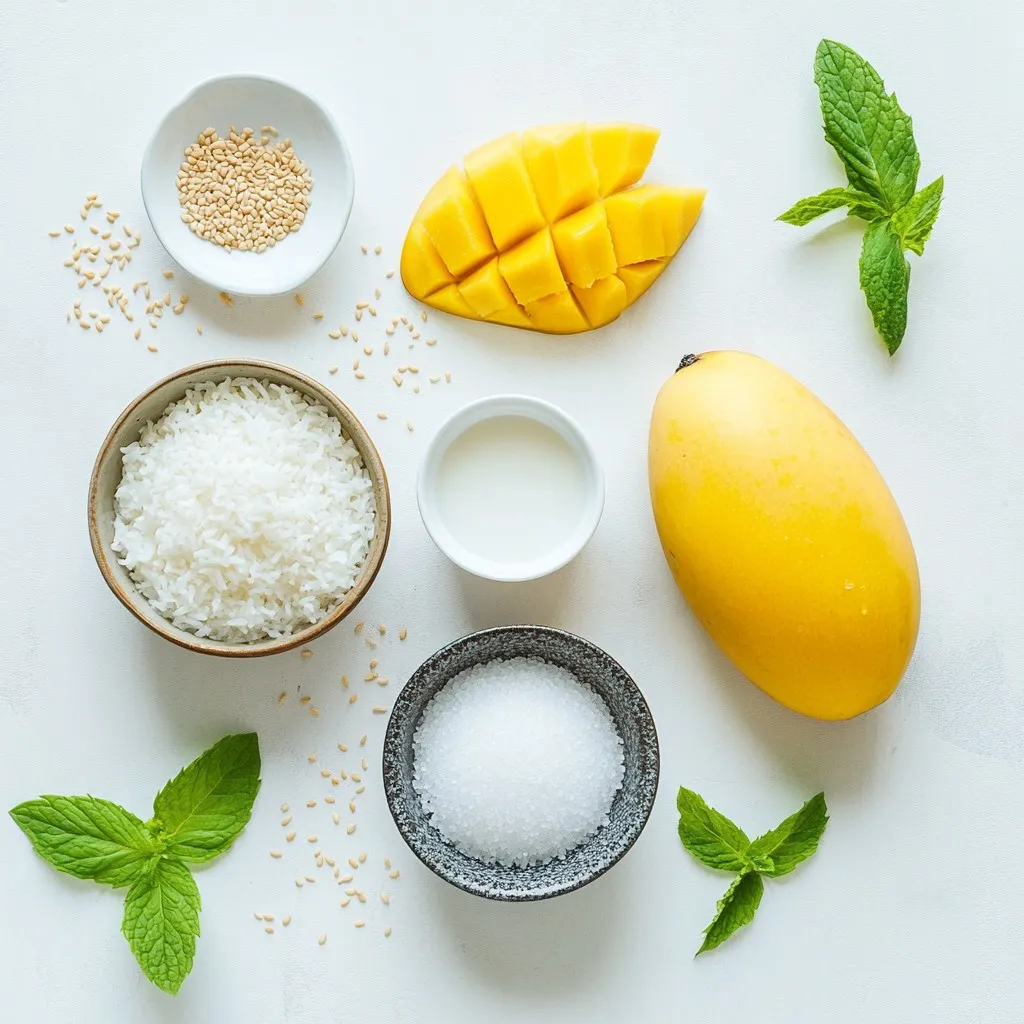
List of Essential Ingredients
– 1 cup glutinous (sticky) rice
– 1 ½ cups coconut milk
– ½ cup sugar
– ½ teaspoon salt
– 2 ripe mangoes, peeled and sliced
– 1 tablespoon sesame seeds, toasted
– Fresh mint leaves for garnish (optional)
Mango sticky rice is simple yet delightful. The key ingredient is glutinous rice. This type of rice has a unique sticky texture when cooked. It absorbs flavors well and forms a perfect base for our dish.
Next is coconut milk. This adds creaminess and rich taste to the rice. Use fresh coconut milk for the best flavor. You will also need sugar to sweeten the dish. A pinch of salt balances the sweetness nicely.
Ripe mangoes are essential too. They provide freshness and juiciness. Look for mangoes that are soft to the touch. Their sweet flavor pairs well with the creamy rice.
Lastly, consider garnishes. Toasted sesame seeds add a nice crunch. Fresh mint leaves brighten up the dish and add color. These optional garnishes make your dessert even more appealing.
Gather these ingredients for a delightful treat that everyone will love!
Step-by-Step Instructions
Preparing the Glutinous Rice
To start, you need to rinse the glutinous rice. Rinse it under cold water until the water runs clear. This helps remove any excess starch. After rinsing, soak the rice in water for at least two hours. Soaking it overnight gives the best texture.
Once the rice is soaked, drain it well. Next, steam the rice using a bamboo or metal steamer. Line the steamer with cheesecloth to keep the rice from falling through. Steam the rice for about 30 to 35 minutes. You want it to be cooked and translucent.
Making the Coconut Sauce
While the rice cooks, it’s time to make the coconut sauce. In a saucepan, combine coconut milk, sugar, and salt over medium heat. Stir the mixture until the sugar dissolves completely. Keep an eye on the heat; you don’t want it to boil.
The right temperature is key. This helps the flavors meld without ruining the sauce’s texture.
Assembling the Dish
Now for the fun part: assembling your dish! Start by placing a generous scoop of sticky rice on a serving plate. Next, top it with sliced mangoes. Drizzle some of the warm coconut milk over the mango and rice.
For the final touches, sprinkle toasted sesame seeds on top for a nice crunch. If you like, add fresh mint leaves for a pop of color and flavor. Enjoy your mango sticky rice!
Tips & Tricks
Selecting Ripe Mangoes
When choosing mangoes, look for a few key traits. A good mango feels slightly soft when you press it gently. The skin should have a deep color, often yellow or red. Sweet-smelling mangoes are more likely to be ripe. Avoid mangoes with dark spots or wrinkled skin.
Mangoes have specific seasons depending on where you live. In many places, they are best from late spring to summer. Always check local markets to find the freshest mangoes.
Achieving the Perfect Sticky Rice Texture
Getting the right sticky rice texture is crucial. Start by soaking the glutinous rice for at least 2 hours. Soaking overnight gives even better results. This helps the rice absorb water and cook evenly.
When it’s time to cook, steam the rice. Use a bamboo or metal steamer lined with cheesecloth. Steam the rice for about 30 to 35 minutes. The rice should turn translucent and be soft to touch.
Flavor Enhancements
To make your mango sticky rice even better, consider adding toppings. Toasted sesame seeds add a nice crunch. You can also try shredded coconut or chopped nuts for extra texture.
Balancing sweetness and saltiness is key. The coconut sauce should be sweet but not too sweet. Adding a little salt helps bring out the flavors. Drizzle extra coconut milk on top for a rich finish.
Pro Tips
- Soaking the Rice: Soaking the glutinous rice for at least 2 hours or overnight ensures it cooks evenly and achieves the desired sticky texture.
- Temperature Control: When heating the coconut milk, keep the heat low to prevent boiling; this helps maintain a smooth and creamy texture.
- Flavor Infusion: Allow the rice to sit after adding the coconut milk mixture; this step is crucial for the rice to absorb all the delicious flavors.
- Garnishing: Adding fresh mint leaves not only enhances the presentation but also provides a refreshing contrast to the sweetness of the dish.
Variations
Alternative Ingredients
You can change the taste of mango sticky rice by switching a few ingredients. If you want to substitute coconut milk, try using almond milk or cashew milk. These will give you a nutty flavor. Make sure to use unsweetened versions. For sweeteners, while sugar is classic, you can use honey or agave syrup. Each sweetener adds its own twist.
Flavor Profiles
Adding tropical fruits can enhance your dish. Try including pineapple or passion fruit. They add freshness and tang. You can also infuse the coconut sauce with flavors. Adding pandan leaves gives a lovely aroma. Just simmer them with the coconut milk for a few minutes.
Presentation Ideas
Get creative when serving your mango sticky rice! Use a ring mold to shape the rice on the plate. This gives it a nice look. For garnishes, sprinkle toasted coconut or edible flowers. These bright colors will make your dish pop.
Traditional plating is simple, but modern plating can be fun. You can drizzle coconut sauce in a zigzag or create a swirl. Both styles showcase your culinary skills and make the dish appealing.
Storage Info
Storing Leftover Sticky Rice
After enjoying mango sticky rice, you might have some leftover sticky rice. Store it in an airtight container. This keeps it fresh and prevents it from drying out. Make sure to refrigerate it within two hours of serving. It can last in the fridge for about three days.
To reheat sticky rice, use a steamer or microwave. If using a microwave, add a splash of water. Cover it with a damp paper towel to keep it moist. Heat for about 30 seconds at a time until warm. This method helps maintain its soft texture.
Keeping Mango Fresh
For fresh mango slices, store them in an airtight container in the fridge. They are best eaten within one to two days for the best taste. If you want to keep them longer, freezing is a great option.
To freeze leftover mango, peel and slice the fruit. Place the slices in a single layer on a baking sheet. Freeze them for a few hours until firm. Then, transfer the frozen slices to a zip-top bag. This way, you can enjoy mango in smoothies or desserts later on.
FAQs
What is Mango Sticky Rice?
Mango sticky rice is a sweet Thai dessert. It combines sticky rice, fresh mango, and coconut milk. This dish is popular in Thailand and Southeast Asia. Many people enjoy it during festivals and special occasions.
Cultural Significance:
Mango sticky rice holds a special place in Thai culture. It often appears during the Thai New Year, known as Songkran. People use ripe mangoes, which are in season during this time. This dessert showcases a blend of flavors and textures, making it a delight for all.
Common Variations:
You can find different takes on mango sticky rice. Some use different sweeteners, like palm sugar. Others might add toppings such as mung beans or coconut flakes. Each region adds its twist, making this dish diverse and exciting.
Can I make Mango Sticky Rice ahead of time?
Yes, you can make mango sticky rice ahead of time. It’s a great dessert for parties and gatherings.
Preparation Scheduling Tips:
You can steam the rice and make the coconut sauce a day before. Keep the rice warm and let the sauce cool. Assemble the dish right before serving to keep it fresh.
Storage Guidelines:
Store leftover sticky rice in an airtight container in the fridge. It stays good for about three days. For the mango, keep it fresh in the fridge but use it within a day or two.
Is Mango Sticky Rice gluten-free?
Yes, mango sticky rice is gluten-free. It uses glutinous rice, which is safe for those avoiding gluten.
Discussing Ingredients and Allergies:
Check the coconut milk brand for any added ingredients. Some brands may have allergens. Always read labels to ensure safety.
Health Considerations and Benefits:
Mango sticky rice has some health benefits. Mangoes are rich in vitamins A and C. They also have fiber, which is good for digestion. Enjoying this dessert in moderation can be part of a balanced diet.
Mango Sticky Rice is a simple yet delightful dish that combines key ingredients like glutinous rice, coconut milk, and ripe mangoes. You learned how to prepare each part, from soaking the rice to making the creamy sauce. Remember to choose ripe mangoes for the best flavor and texture. Explore variations to make this dish your own. With the tips I shared, you can store leftovers and enjoy this treat multiple times. Mango Sticky Rice is not just food; it’s an experience. Make it, share it, and savor its sweet jo